Storm Water Management: A Timely Message from the Conservation Committee

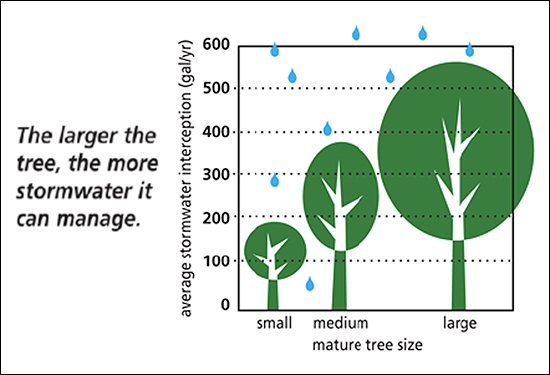
The city of New Orleans and its citizens must adopt Best Management Practices (BMP) to successfully manage the heavy rainfall that New Orleans frequently receives. The rain is going to fall so we might as well use it to our advantage. Good storm water management measures can be as common sense as protecting and maintaining mature trees. Researchers have found that one mature tree can absorb nearly 900 gallons of stormwater a day; a block full of trees can mean the difference between flooding and not flooding a neighborhood. Rain gardens and rain storage systems capture and hold rain allowing water to penetrate in place and thus combat subsidence. Using pervious surfaces for parking lots, driveways and patios allows rainwater to remain close to where it falls instead running into drainage canals or streets. A bioretention cell is a stormwater best management practice designed to capture and treat the first flush of rain runoff from impermeable surfaces such as a traditional parking lot. Bioretention cells are landscaped depressions used to slow and treat onsite stormwater runoff. Stormwater drains towards the basin and then percolates through the system where it is cleaned by plants and microbes. This is a far better landscape solution than the traditional raised planted beds in parking lots whose trees have an average lifespan of 7 years. Some immediate benefits from water management practices such as these are improved water quality, flood control, community design, habitat creation, reduction of our urban heat island, improved air quality and these are incremental solutions that can be added to along the way.

Summertime in the Edible Schoolyard

Earlier this summer, Virginia Rowan organized a band of NOTG PropaGators who spent a morning in the Edible Schoolyard at Samuel Green Charter School in uptown New Orleans. The group weeded and planted beds and did a great job cleaning out the wetlands pond, finding tadpoles galore.

Personal actions you can take to reduce your use of plastics

Recycle - Less than 14% of plastic packaging is recycled. Go on a Plastics Diet - 90% of the plastic items in our daily lives are used once. Ban the Bags - Urge officials to follow the lead of over 150 cities and counties by passing legislation to ban the use of plastic bags or impose a use-fee per bag. Stop Buying Water in Plastic Bottles - Close to 20 billion water bottles are tossed into the trash each year. Buy in Bulk - Consider the product-to-packaging ratio of items you buy. Single serving containers and travel size toiletries use decidedly more plastic. Cook More - It’s healthier and cooking at home eliminates plastic & styrofoam takeout containers, plastic bags, plastic cutlery, and small plastic condiment containers. Bring your own Garment Bag to the cleaners - Invest in a zippered fabric bag and request that your cleaned items be returned in it instead of plastic. Consumer Rights - Contact corporations and ask them to use less plastic packaging and more recyclable containers. Get the word out - Tell your friends and community about ways to cut back on the growing use of plastics. It can make a BIG difference for our oceans.

Zone Meeting Flower Show Highlights!

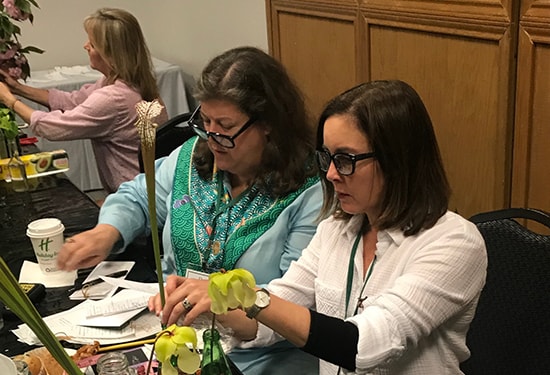
Floral Design Linda Miller, 2nd place for her beautiful two-sided arrangement for Wonders of Restoration Photography Maria Wisdom, 2nd place for her photograph of birds for Wonders of Observation Needle Arts Kathy Eastman, Honorable mention for her beetle needlepoint canvas for Wonders of Delight Horticulture Maxine Fox, 2nd place for her Saintpaulia, or African violet Flora French, 1st place for her Sarracenia flava, or Yellow Pitcher Plant (flower) Flora French, 2nd place for her Sarracenia leucophylla, or Red Pitcher Plant (foliage) Flora French, 2nd place for her Pinus palustris, or Longleaf pine Shane French, 3rd place for her Drosera capillaris, or Sundew Catherine Freeman, 1st place for her Clivia miniata, or Bush Lily Ruthie Frierson, Honorable Mention for her Aechmea fasciata, or Bromeliad Chrisie Kelleher, 1st place for her Graptopetalum payaguayense, or Ghost plant Paige Morrison, Honorable Mention in the Challenge Class for her Lilium matrix, or Lily Marianne Mumford, 3rd place for her Cunninghamia Marianne Mumford, 3rd place for her Trachycarpus fortunei, or Windmill Palm Three Cheers for Chrisie and Linda for representing NOTG!

Wonders of the Wetlands 2019: Zone IX Meeting in Beaumont, Texas

A highlight of the 2019 zone meeting was celebrating with David Waggonner, a partner in the architectural firm Waggonner and Ball, when he received the Zone Civic Improvement Award at the Zone IX Awards Dinner in Beaumont. New Orleans Town Gardeners proposed David for this award because of his visionary work with water management. After Katrina, David became a champion of solving water management problems in New Orleans and throughout the region by making water an asset not an adversary. Congratulations David!

Coastal Loss Series, Part Four: What do hogs have to do with coastal loss? Plenty!

This is the fourth of a four part series focused on Coastal Loss and presented by the NOTG Conservation Committee. Thanks to Carro for these informative articles! Feral hogs (Sus scrofa), were introduced as domestic pigs in the 1500's by European explorers. They now number over 700,000 in Louisiana and are found in all 64 parishes. Sexually mature at 6 months, wild hogs can produce 6-12 piglets twice a year. Considered by some conservation groups as the #1 invasive species in terms of detriment, hogs cause millions of dollars in agricultural, cultural, and coastal damage annually. Feral hogs are omnivores and can adapt to nearly any environment from desert to marsh to piney woods and hardwoods and can even survive in sub-arctic conditions. Hardy and adaptive, hogs eat everything from grubs, acorns and herbaceous plant roots to bird and turtle eggs, chicks and fawns. They out-compete other animals for food and destroy habitat for native animals such as ground dwelling birds. Hogs’ insatiable appetite for acorns reduces germination of these native hardwoods which are important for water retention during storms. These porcine bull dozers root on marshes and levees, weakening the plant material vital to holding the soil in place. Bare soil that isn’t washed away is now vulnerable to invasive species. According to Louisiana Wildlife & Fisheries, statisticians have determined that 75 percent of the feral hog population must be harvested simply to maintain a static population. A number of possible solutions are being researched. At present, hog hunting season is "open 365 days per year" to combat their growing numbers, and approximately 350,000 animals are harvested annually.

Going Green at the March Meeting

Carro Gardner brought a fresh and radical approach to the lunch at our March meeting, serving as head hostess her first time since joining the club in 2001. An avid organic gardener, environmentalist, champion of sustainability and new board member of City Park, Carro decided we should try to make our club meeting at the Grow Dat youth farm as earth-friendly as possible. Toward that end, she led her hostess team in rethinking how we handle lunch. Individuals brought real tablecloths and napkins, stainless silverware, and plastic Mardi Gras cups….all of which could be washed and reused. We purchased biodegradable bamboo plates. Four members each brought two casual flower arrangements with plant material from their yards for the table decorations. Instead of water bottles, Carro brought a two gallon water cooler. Instead of box lunches, Carro ordered organic green salad from Grow Dat and 4 varieties of healthy delicious wrap sandwiches from Green to Go, all served family style. When we finished eating, any food waste was scraped into a bucket which was then used for composting. The cans from some sodas and sparkling water were recycled. And after everything was cleaned up, Carro hoisted a very small bag overhead to show how little packaging was used and how little actual trash we accumulated from serving 45 people. In addition to the almost negligible environmental impact of the lovely outdoor lunch, when the bill was tallied up, the luncheon cost HALF of our normal garden club lunch expenses. Each hostess only needed to chip in $31.50 for a beautiful, ecologically sound lunch in City Park. We left the site without any trace of having been there! Thanks to Karin Giger Eustis for writing up this great report on how Carro and her hostess committee made such a difference! Previous Next

NOTG Art Committee is at it again!

Members of the Art Committee gathered at Katie Rafferty’s studio recently to paint butterflies for the Edible Schoolyard butterfly garden at Arthur Ashe Charter School. Stay tuned for pictures of the butterflies in their new garden home this spring!

Garden Library News

Native Flora of Louisiana, featuring the beautiful botanical illustrations of Margaret Stones, is now on display in the Garden Library. Many thanks to Ruthie Frierson, who donated the folio-style book and invited Margaret Stones’s collaborator, Lowell Urbatsch, to sign the Garden Library’s copy. Per LSU Press: Praised as one of the most accomplished botanical artists of the twentieth century, Margaret Stones  established a new standard for botanical illustration during her long career. In 1975, Louisiana State University chancellor Paul W. Murrill commissioned Stones to create a series of drawings of native Louisiana plants and described the outcome of that project as “a modern-day equivalent of John James Audubon’s Birds of America.” Decades after their completion, Stones’s drawings remain on display in museums and serve as an exceptional resource. Drawn only from fresh plants gathered under the guidance of LSU professor Lowell Urbatsch, Stones’s detailed and captivating depictions remain a lasting and unprecedented study of the state’s natural beauty. This folio edition offers a complete collection of Stones’s Louisiana illustrations on archival, acid-free paper. Paired with botanical descriptions by Urbatsch, these exceptional museum-quality reproductions of the artist’s watercolors provide intimate access to the precision and delicacy that define Stones’s mastery.